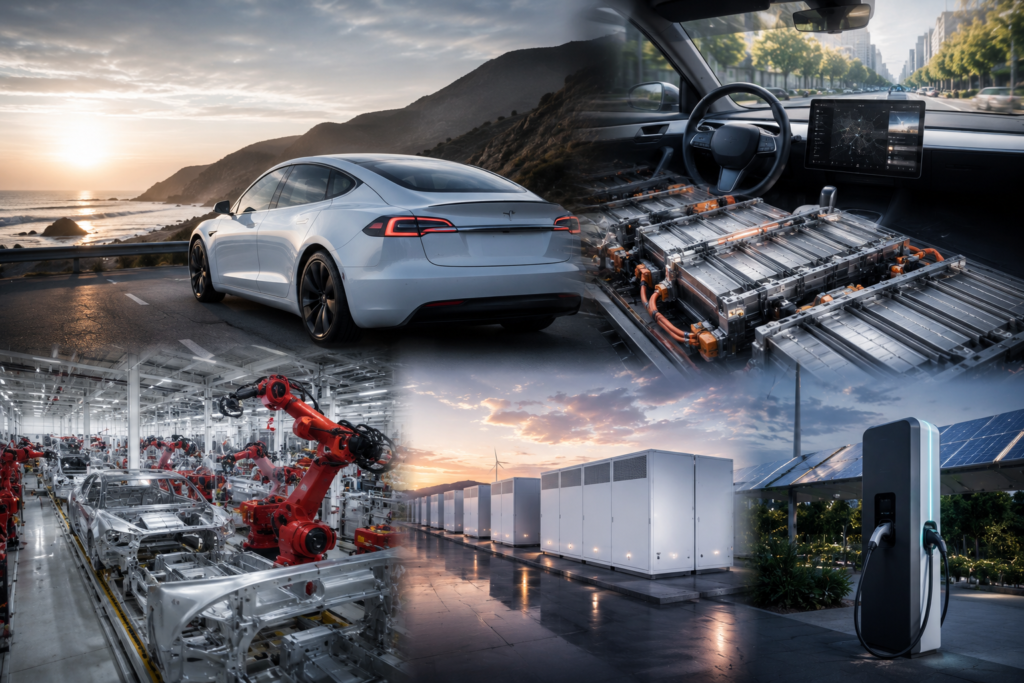
Tesla, Inc. (NASDAQ: TSLA) designs, manufactures, sells and leases electric vehicles and also operates a fast-growing energy generation and storage business, alongside AI-driven initiatives including Full Self-Driving (FSD) software, the Cybercab robotaxi service and the Optimus humanoid robot program. This page brings together live TSLA market data, charting, financials, technical indicators, company details, recent news and a clearly labelled Shariah-screening snapshot for research purposes. Market data and widgets below update dynamically; Shariah status should be treated as time-sensitive and independently verified. For related coverage of the AI systems underpinning Tesla’s autonomy and robotics roadmap, see SageMiniTech’s Artificial Intelligence pillar page.
Tesla (TSLA) Symbol Information
TSLA trades on NASDAQ. The panel below summarizes the current symbol — price, exchange and identifying details — as a quick reference before reviewing deeper fundamentals and charts.
Market information shown here may update dynamically throughout the trading session. Verify any material figure through Tesla’s official filings before relying on it.
TSLA Advanced Stock Chart
The interactive chart below displays TSLA price and volume history across multiple time intervals, from intraday to multi-year views. Tesla’s share price has historically reacted closely to quarterly vehicle delivery and production figures, Full Self-Driving and robotaxi progress, Optimus development updates, competitive dynamics with BYD and other EV makers, and Elon Musk-related developments — price history is one input among several and should be considered alongside fundamentals, not in isolation.
Chart patterns are not guarantees of future performance. Price movements may reflect quarterly delivery and production updates, Energy Generation and Storage segment results, FSD and robotaxi expansion news, Optimus program milestones, tariff or trade-policy developments, or broader sentiment toward EV and AI-related stocks.
TSLA Financial Statements and Fundamentals
Key figures worth examining for Tesla include total revenue and the split between its Automotive segment (vehicle sales, leasing and regulatory credits) and its Energy Generation and Storage segment (Megapack and Powerwall sales, leasing and financing), gross margin, operating margin, free cash flow, and capital expenditure directed at Gigafactory capacity, AI training infrastructure and the Optimus and Cybercab programs — Tesla does not currently pay a dividend and has not maintained an active, board-authorized share-repurchase program in recent periods, instead retaining earnings to fund growth.
Financial panels should be read across multiple reporting periods rather than a single quarter, and checked against Tesla’s official filings via its SEC filings page.
TSLA Company Profile and Business Model
Tesla operates through two reportable segments: Automotive, covering the design, development, manufacturing, sale and leasing of electric vehicles such as the Model 3, Model Y, Model S, Model X and Cybertruck, along with software offerings including Full Self-Driving (Supervised) and the Cybercab robotaxi initiative; and Energy Generation and Storage, covering solar energy products and battery storage systems such as the Powerwall (residential) and Megapack (utility-scale), along with related services and energy credits. Tesla is also developing the Optimus humanoid robot, which the company has positioned as sharing underlying AI and compute platforms with its vehicle autonomy software.
Tesla’s competitive position rests on vertically integrated manufacturing across Gigafactories in the United States, China and Germany, in-house battery and AI-chip development, a large Supercharger network, and its FSD/robotaxi and Optimus programs. Principal competitors include BYD and other Chinese EV makers, legacy automakers expanding electric-vehicle lineups such as Ford, General Motors, Volkswagen, Toyota and Mercedes-Benz, and other EV-focused manufacturers including Rivian, Lucid, NIO, XPeng and Li Auto.
TSLA Technical Analysis
This widget summarizes technical indicators — moving averages, oscillators and overall signal counts — for TSLA across selected timeframes.
Technical signals change as new data arrives and should not be treated as a recommendation. Consider them together with fundamentals, valuation and Tesla’s competitive position in the EV, energy-storage and AI/robotics markets.
TSLA Historical Stock-Price Overview
The overview below covers TSLA price and percentage change across several date ranges, with volume and moving-average context. Tesla’s long-term stock history reflects its growth from a niche EV maker into one of the world’s most valuable automakers by market capitalization, punctuated by two stock splits (5-for-1 in 2020 and 3-for-1 in 2022), the buildout of its Energy Generation and Storage business, and more recently investor focus on FSD, robotaxi expansion and the Optimus program alongside shareholder approval in November 2025 of a new long-term, performance-based compensation package for CEO Elon Musk — price history is best interpreted alongside these business and governance developments rather than price movement alone.
Historical performance does not guarantee future results and reflects a specific past period only.
TSLA Shariah Compliance Snapshot
The snapshot below reflects third-party Shariah screening for TSLA based on AAOIFI-derived methodology. Screening results change as market capitalization, debt, cash and non-permissible income change — treat this as a starting reference, not a permanent certification.
Latest TSLA News
The feed below may include dynamically updated market stories related to Tesla.
Distinguish between official Tesla announcements, SEC filings, earnings releases, analyst commentary and general media coverage. Verify material news through Tesla’s investor relations page and official filings.
Key Investor Considerations for TSLA
Potential Strengths
- Leading EV brand recognition and vertically integrated manufacturing scale across multiple Gigafactories
- Fast-growing Energy Generation and Storage segment (Megapack, Powerwall) now a meaningful share of total revenue
- In-house battery, chip and AI software development supporting Full Self-Driving and broader autonomy ambitions
- Expanding Cybercab robotaxi service footprint in select U.S. metro areas
- Early-stage Optimus humanoid robot program viewed by the company as long-term growth optionality
- Large Supercharger network and a growing software and services ecosystem
Material Risks
- Intensifying competition from BYD and other Chinese EV makers, plus expanding EV lineups from legacy automakers
- Margin pressure from vehicle price adjustments and rising industry-wide competition
- Execution and regulatory risk around FSD, robotaxi expansion and Optimus commercialization timelines
- Key-person dependence on Elon Musk, underscored by the scale and structure of his newly approved long-term compensation package
- Sensitivity to tariffs, trade policy and regional EV-incentive changes
- Valuation sensitivity typical of high-growth, high-multiple technology and automotive stocks
Frequently Asked Questions
What does Tesla, Inc. do?
Tesla designs, manufactures, sells and leases electric vehicles including the Model 3, Model Y, Model S, Model X and Cybertruck, and develops Full Self-Driving software and the Cybercab robotaxi initiative. Tesla also produces energy generation and storage products, including the Powerwall and Megapack, and is developing the Optimus humanoid robot.
On which exchange is Tesla listed?
Tesla, Inc. trades on the NASDAQ stock exchange under the ticker symbol TSLA.
What are Tesla’s main business segments?
Tesla reports two segments: Automotive (vehicle design, manufacturing, sales and leasing, plus FSD software and the Cybercab robotaxi initiative) and Energy Generation and Storage (Powerwall and Megapack battery storage, solar products and related services).
Does Tesla pay a dividend?
No. Tesla has never paid a dividend on its common stock and has stated it intends to retain earnings to fund growth, manufacturing capacity and research and development; the company also does not currently maintain an active, board-authorized share-repurchase program.
What is Tesla’s Full Self-Driving (FSD) and robotaxi business?
Full Self-Driving (Supervised) is Tesla’s advanced driver-assistance software, while the Cybercab robotaxi initiative extends this technology into a driverless ride-hailing service that Tesla has been expanding in select U.S. metro areas, including Austin, Dallas and Houston. Both remain subject to regulatory approval and ongoing safety validation as Tesla pursues additional markets.
Who are Tesla’s main competitors?
Tesla competes with BYD and other Chinese EV manufacturers, legacy automakers expanding their electric-vehicle lineups such as Ford, General Motors, Volkswagen, Toyota and Mercedes-Benz, and other EV-focused manufacturers including Rivian, Lucid, NIO, XPeng and Li Auto.
Is Tesla stock currently Shariah compliant?
Zoya screens TSLA as Shariah-compliant under AAOIFI standards, with its page last updated August 2026 and citing interest income of approximately 1.77% of revenue for the fiscal year ended December 31, 2025. Investors should check a current, named screening source before relying on any compliance status.
Conclusion
Tesla has grown from a niche electric-vehicle manufacturer into one of the world’s most valuable automakers by market capitalization, anchored by vertically integrated manufacturing, a fast-growing Energy Generation and Storage business, and ambitious AI-driven initiatives spanning Full Self-Driving software, the Cybercab robotaxi service and the Optimus humanoid robot program. That position is balanced against intensifying competition from BYD and other EV makers, margin pressure from pricing actions, execution and regulatory risk around autonomy and robotics timelines, and governance considerations tied to Elon Musk’s newly approved long-term compensation package. The tools on this page — charts, financials, technical indicators and news — support ongoing research into Tesla’s position, but they do not replace a review of Tesla’s official filings or independent financial, legal, tax or Shariah advice.