
What Is an IPO Lockup Period?
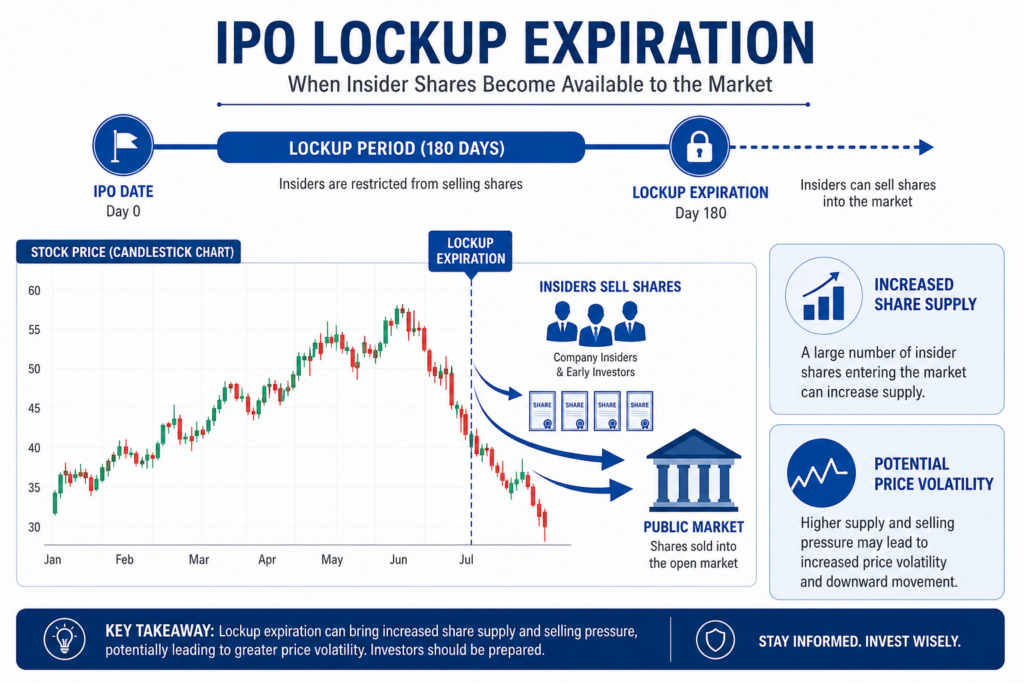
IPO lockup expiration is a major event that occurs when company insiders are allowed to sell shares after a temporary post-IPO restriction ends. This period matters because it can increase share supply, influence stock prices, and create short-term market volatility.
The lockup period usually lasts between 90 and 180 days after the IPO, although the exact duration depends on the company’s agreement with underwriters. Investment banks use lockup agreements to prevent a sudden flood of shares from entering the market right after the IPO.
This restriction helps stabilize the stock during its early trading period. Without a lockup, a large number of insiders could sell their shares at once, increasing supply and creating downward pressure on the stock price.
What Happens After IPO Lockup Expiration?
Once IPO lockup expiration occurs, insiders are allowed to sell some or all of their shares in the public market. This event often attracts strong attention from traders and investors because it can significantly increase the number of shares available for trading.
A larger supply of shares does not always cause a stock to fall, but it can influence short-term market behavior. If many insiders decide to sell soon after the lockup period ends, the sudden increase in selling pressure may push prices lower.
Investors closely monitor lockup expiration dates because insider selling can sometimes signal changing sentiment. Heavy selling may be interpreted as a lack of confidence in future growth, even though insiders may sell for unrelated reasons such as portfolio diversification, tax planning, or liquidity needs.
For example, imagine a company that issued 50 million shares during its IPO, while insiders still hold 200 million locked shares. After IPO lockup expiration, a significant portion of those 200 million shares may become eligible for sale. Even if only a fraction enters the market, trading volume and volatility can increase noticeably.
Because of this, lockup expiration is often considered an important post-IPO milestone for investors evaluating risk and market sentiment.
Why Stock Prices Often Fall After Lockup Expiration
Stock prices often become more volatile after IPO lockup expiration because the market suddenly faces a larger supply of shares. In basic market terms, when supply increases faster than demand, prices may decline.
Another reason is market psychology. Traders often anticipate insider selling and may sell their own positions before the lockup ends, creating additional downward pressure. This expectation alone can sometimes move prices even before insiders actually sell.
However, a stock does not always fall after lockup expiration. If the company has strong earnings, high investor confidence, or strong institutional demand, the market may absorb the extra shares with little impact.
Should Investors Worry?
Investors should not automatically view IPO lockup expiration as a negative signal. Insider selling can happen for many normal reasons, including diversification, personal financial planning, or liquidity needs.
Instead of reacting to the event alone, investors should evaluate:
- How many locked shares are becoming available
- Whether insiders are actively selling
- The company’s recent earnings and growth
- Overall market sentiment toward the stock
A lockup expiration becomes more important when a large percentage of total outstanding shares suddenly becomes eligible for sale.
Frequently Asked Questions
What is the standard lockup period after an IPO?
Most IPO lockup periods last between 90 and 180 days, depending on the underwriting agreement.
Does every stock drop after lockup expiration?
No. Some stocks decline due to selling pressure, while others remain stable or continue rising.
What drives insider selling after an IPO lockup expires?
Insiders may sell to diversify wealth, cover taxes, or gain liquidity—not necessarily because they expect the stock to perform poorly.
Final Thoughts
IPO lockup expiration is an important event for post-IPO stocks because it can increase share supply and short-term volatility. While it may create temporary selling pressure, investors should analyze insider activity, company fundamentals, and market demand before making investment decisions.