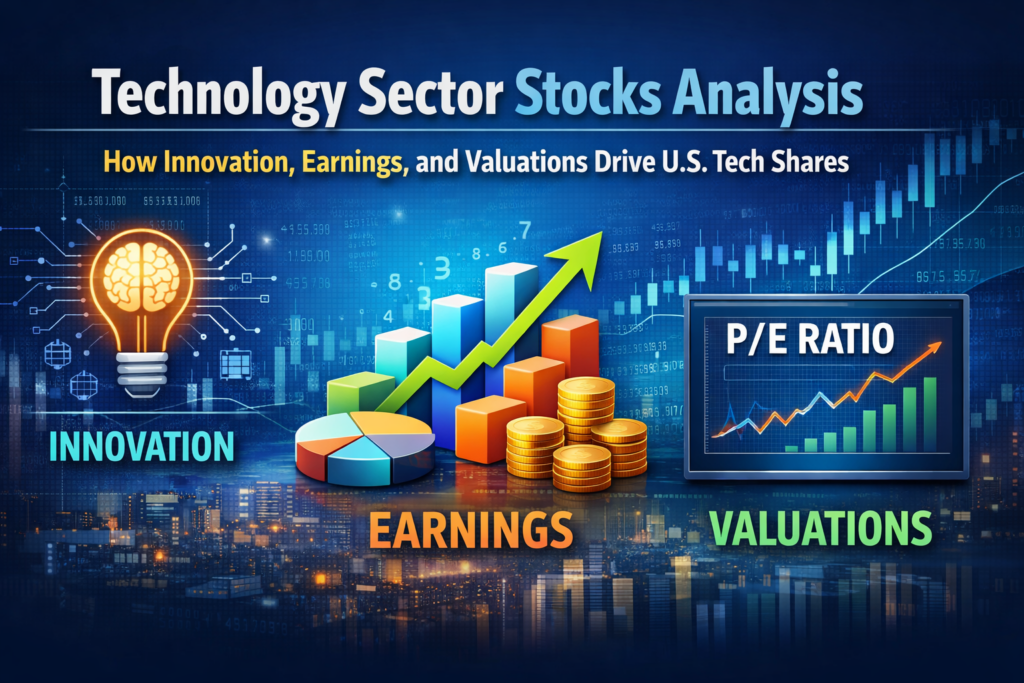
Finding the best tech stocks 2026 has to offer means looking past the headlines and into what’s actually driving performance this year: AI infrastructure spending, semiconductor demand, and a handful of platform companies still compounding growth years after their IPOs. The sector isn’t behaving like it did in 2021 — cheap capital and hype cycles have given way to a market that rewards real earnings and punishes weak balance sheets fast. That’s actually good news for investors doing the work, because it separates durable winners from momentum plays more clearly than it has in years.
Here’s what actually matters: which names are worth watching, where the real undervalued plays are hiding, why AI and semiconductor stocks keep leading the pack, how to size up a tech stock before committing money to it, and the risks most roundups conveniently leave out.
What Makes a Tech Stock “Best” Right Now
Not every fast-growing company deserves a spot on a list of the best tech stocks 2026 has to offer. Growth alone isn’t enough anymore — the market has spent the last few years punishing companies that grew revenue while burning cash with no path to profitability. The stocks that actually hold up under this label share three traits.
First, growth that’s still accelerating or at least holding steady, not decelerating quarter over quarter. Second, margins that are expanding or already high — software and semiconductor companies with strong gross margins have far more room to absorb a slowdown than hardware-heavy or subsidized-growth businesses. Third, sector positioning: where a company sits inside a bigger structural trend matters as much as its own numbers. A company riding AI infrastructure demand, cloud migration, or cybersecurity spending has tailwinds a company fighting for share in a saturated market doesn’t.
Put together, these three filters are what separate a genuinely strong candidate for best tech stocks 2026 from a stock that just had one good earnings report. The next section looks at specific names that pass this test.

Top Tech Stocks to Watch in 2026
Any shortlist of the best tech stocks 2026 has to offer starts with the companies actually setting the pace for the sector — not just riding it. Amazon and Nvidia represent two very different paths to that position: one a diversified giant monetizing AI through infrastructure and cloud, the other the dominant supplier of the hardware making the AI buildout possible in the first place. Neither is a speculative pick; both are established, profitable businesses where the debate isn’t whether they’ll survive a downturn, but how much room they still have to grow. Here’s a quick look at where each stands heading into the rest of 2026.
Amazon (AMZN)
Amazon remains one of the clearest examples of a company benefiting from multiple tech trends at once. AWS continues to anchor the company’s margins while increasingly becoming an AI infrastructure play in its own right, and the retail business has become leaner and more profitable than it was a few years ago. For investors building a case around the best tech stocks 2026, Amazon’s combination of cloud dominance, logistics scale, and advertising growth gives it more ways to win than most single-thesis tech names. For the full breakdown of its financials, earnings history, and valuation, see our Amazon (AMZN) stock analysis.
Nvidia (NVDA)
Nvidia sits at the center of the AI buildout as the dominant supplier of the chips training and running most large AI models today. That position has made it one of the most-watched names in any conversation about the best tech stocks 2026, though it also means the stock carries real concentration risk tied to AI capital spending cycles and competitive pressure from custom silicon efforts at major cloud providers. Margins remain exceptional for now, but investors should weigh how much of future growth is already priced in. For full financials and valuation detail, see our Nvidia (NVDA) stock analysis.
Undervalued Tech Stocks Worth Considering
Not every strong candidate for best tech stocks 2026 is trading at a premium. Some of the more interesting opportunities right now sit in pockets of the sector the market has temporarily overlooked — often because they got lumped in with weaker peers during a sector-wide pullback, or because their growth story is less obvious than a headline AI name’s.
A few patterns tend to show up in genuinely undervalued tech names. Profitable software companies trading at multiples well below their historical average, despite steady or improving retention and margins, are worth a second look — the market sometimes prices in a slowdown that hasn’t actually shown up in the numbers. Semiconductor and hardware suppliers one or two steps removed from the most hyped AI names can also be overlooked, even when they’re supplying picks-and-shovels components to the same buildout. And established cloud or infrastructure players that get compared unfavorably to faster-growing competitors sometimes get undervalued on growth rate alone, while their cash flow and balance sheet strength go underappreciated.
The honest caveat: “undervalued” is a judgment call, not a guarantee, and it depends heavily on the price paid and the timeframe held. Anyone building a shortlist of the best tech stocks 2026 around this angle should treat these as starting points for their own research, not conclusions — valuation gaps can persist, and sometimes the market is right.
AI and Semiconductor Stocks Leading the Sector
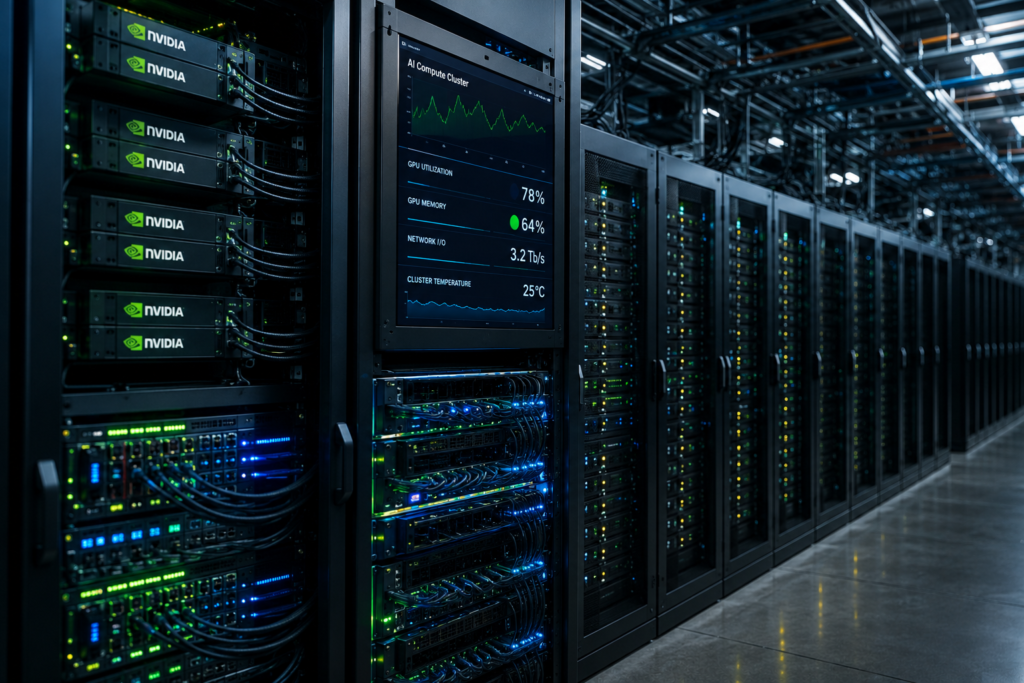
No conversation about the best tech stocks 2026 has to offer is complete without the AI and semiconductor names driving most of the sector’s gains this year. This corner of the market has done the heavy lifting for tech-sector performance since the AI buildout accelerated, and it shows no signs of slowing heading into the back half of 2026.
The demand story is straightforward: training and running large AI models requires enormous amounts of specialized computing power, turning chipmakers and their supply chains into some of the most important companies in the entire market, not just tech. Beyond the most visible names, the theme extends further:
- Memory chip makers benefiting from surging AI server demand
- Semiconductor equipment manufacturers supplying the fabs building next-generation chips
- Cloud providers racing to build their own custom AI silicon to reduce dependence on outside suppliers
The risk in this corner of the sector is concentration:
- A large share of the gains behind any list of the best tech stocks 2026 traces back to AI infrastructure spending specifically
- A slowdown in capital expenditure from a handful of major buyers could ripple through the entire group at once
- Investors drawn to this theme should weigh how exposed a portfolio already is to AI infrastructure before adding more, rather than treating each new name as an independent bet
How to Evaluate a Tech Stock Before Buying
Picking names off any list of the best tech stocks 2026 has to offer is only the starting point — the real work is evaluating whether a stock actually deserves a place in a portfolio. A few checks matter more than the rest:
- Revenue growth trend — is growth accelerating, holding steady, or decelerating over the last several quarters? A single strong quarter means far less than a consistent trajectory.
- Margins and profitability — gross and operating margins reveal how much pricing power and efficiency a company actually has, not just how fast it’s growing.
- Balance sheet strength — cash position, debt load, and free cash flow determine how well a company can weather a slowdown without diluting shareholders or cutting growth investment.
- Valuation relative to growth — a stock can be a great business and still be a bad buy at the wrong price; comparing valuation multiples to growth rate and historical averages matters more than the multiple alone.
- Sector positioning and moat — does the company hold a durable advantage (platform lock-in, scale, proprietary technology), or is it competing in a crowded space with thin differentiation?
- Management execution — a track record of hitting guidance and allocating capital well is a real signal, especially in fast-moving sectors like AI and semiconductors.
Running any candidate for best tech stocks 2026 through these checks separates a genuinely strong pick from one that just looks good on a headline.

Risks to Watch in Tech Stocks Right Now
Even the strongest candidates for best tech stocks 2026 carry real risk, and no shortlist is complete without naming it plainly:
- Valuation risk — several leading tech names are priced for continued high growth; any deceleration can trigger sharp multiple compression even if the underlying business is still healthy.
- AI capex concentration — a meaningful share of sector-wide gains depends on a small number of companies continuing to spend heavily on AI infrastructure; a pullback from just a few major buyers would ripple across the group.
- Interest rate sensitivity — growth stocks remain more sensitive to rate expectations than value sectors, since future earnings are discounted more heavily when rates rise.
- Regulatory pressure — antitrust scrutiny, data privacy rules, and export restrictions on advanced chips are all live risks for the largest names in the sector.
- Competitive disruption — fast-moving technology shifts can erode a leader’s position quickly; today’s dominant player is not guaranteed that position in two or three years.
None of this rules out tech as a sector — it just means building a position around the best tech stocks 2026 should account for these risks rather than assume the current momentum continues unchecked.
Long-Term vs. Short-Term Tech Stock Picks
Not everyone building a shortlist of the best tech stocks 2026 has to offer is investing on the same timeline, and the right picks can look different depending on the horizon.
Long-term picks tend to share these traits:
- Durable competitive moats — platform lock-in, scale, or proprietary technology that isn’t easily replicated
- Consistent, multi-year revenue and earnings growth rather than one strong cycle
- Strong balance sheets that can absorb downturns without diluting shareholders
- Exposure to structural trends (cloud, AI infrastructure) rather than a single product cycle
Short-term picks tend to hinge on different signals:
- Near-term catalysts — earnings reports, product launches, or guidance updates
- Momentum and relative strength versus the broader sector
- Valuation gaps likely to close within months rather than years
- Higher sensitivity to volatility and rate-driven sentiment shifts
Neither approach is inherently better — it depends on risk tolerance and time horizon. But conflating the two is a common mistake: a stock that makes sense as a short-term trade around a catalyst isn’t automatically a sound long-term holding, and vice versa. Any serious list of the best tech stocks 2026 should make clear which category a pick falls into.

FAQs
What are the best tech stocks 2026 has to offer right now?
There’s no single answer — it depends on whether you’re prioritizing growth, value, or AI/semiconductor exposure. This page breaks down leading names, undervalued opportunities, and the sector themes driving performance.
Are tech stocks still worth buying after the recent AI-driven rally?
It depends on the specific stock’s valuation relative to its growth and fundamentals, not the sector as a whole. Some names still look reasonably priced; others have already priced in years of future growth.
How much of my portfolio should be in tech stocks?
There’s no universal number — it depends on your risk tolerance, time horizon, and existing exposure to the sector. Concentration risk is worth watching given how much of the market’s recent gains trace back to a small group of AI-linked names.
Is Nvidia still a buy in 2026?
Full financials, valuation, and everything else worth knowing about Nvidia (NVDA) — see our complete stock analysis.
Closing
Identifying the best tech stocks 2026 has to offer isn’t about chasing the loudest headline — it’s about matching growth, margins, and sector positioning against your own risk tolerance and time horizon. The names and themes covered here are a starting point for that research, not a substitute for it.
For deeper, data-backed analysis on individual companies mentioned above, explore our full company profile pages, updated with financials, earnings history, and valuation detail. And check back regularly — this page will be updated as new names, sector shifts, and 2026 earnings results reshape the picture.