AI marketing automation for startups is changing how early-stage teams handle the parts of marketing that used to eat up entire days — email sequences, lead scoring, ad optimization, content repurposing, customer segmentation. For a founder wearing five hats, that shift matters more than the hype around it. You don’t need a marketing department to run consistent campaigns anymore; you need the right stack and a clear sense of what to automate first.
This guide walks through where AI marketing automation for startups actually pays off (and where it doesn’t), how to choose tools without overbuying, and how to set up workflows that keep working even when nobody’s watching them. It’s built for founders who want fewer manual tasks and more consistent output, not for teams chasing every new AI feature that launches this month.
What AI Marketing Automation Actually Means for Startups
AI marketing automation for startups isn’t one tool — it’s a layer of software that handles repetitive marketing work so a small team can operate like a bigger one. In practice, it covers a specific set of tasks:
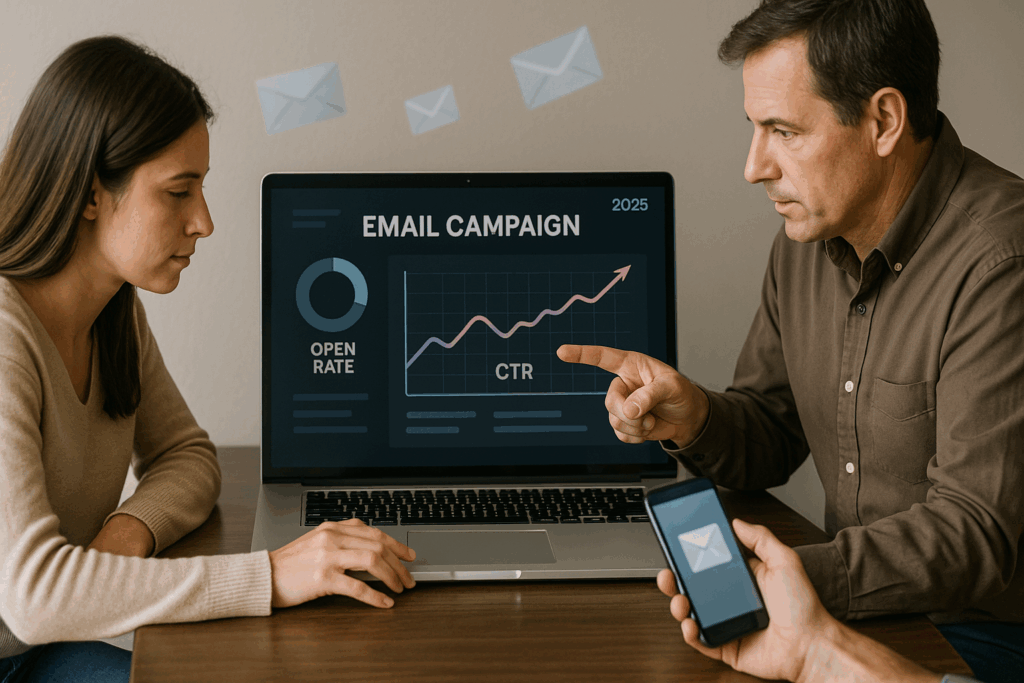
- Email and lifecycle sequences — welcome flows, abandoned-signup nudges, and re-engagement emails that trigger automatically based on user behavior, not a marketer manually sending them.
- Lead scoring and routing — AI ranks incoming leads by intent and fit, so founders spend time on the 10% worth chasing instead of every form fill.
- Ad optimization — automated bid adjustments and creative testing across channels, reallocating spend toward what’s converting in near real time.
- Content repurposing — turning one blog post or webinar into social captions, email copy, and short-form clips without a content team doing it by hand.
- Customer segmentation — grouping users by behavior and lifecycle stage automatically, so messaging stays relevant without manual list-building.

Where AI Marketing Automation Delivers Real Value
AI marketing automation for startups delivers the clearest returns in a handful of specific areas — not everywhere marketers claim it does. It works best where tasks are repetitive, data-driven, and time-sensitive, freeing a lean team to focus on strategy instead of manual execution. Two areas stand out most for early-stage companies: content and campaign execution, and lead scoring with personalization.
Content & Campaign Automation
AI marketing automation for startups turns a single piece of content into a full campaign without adding to headcount. One blog post, webinar, or case study gets automatically reshaped into social captions, email copy, ad variants, and short-form video clips — work that would otherwise require a content team producing each format by hand. Campaign scheduling and multi-channel publishing run on autopilot too, so a launch or product update goes out consistently across email, social, and paid channels at the right moments, without someone manually coordinating each platform.
For a startup, this means a founder or a single marketer can sustain a publishing cadence that looks like a much larger team’s output. The leverage isn’t in producing more raw content — it’s in stretching the content you already have further, consistently, without the manual rebuild each time a new channel or format is needed.
Lead Scoring & Personalization
AI marketing automation for startups also handles the harder-to-scale work of figuring out which leads matter and what to say to them. Instead of a founder manually reviewing every signup or demo request, scoring models rank leads by behavioral and firmographic signals — company size, engagement level, page visits, intent indicators — surfacing the ones worth immediate follow-up.
Personalization builds on that same data: emails, on-site messaging, and even ad creative can adjust automatically based on where a lead sits in the funnel, rather than sending the same generic sequence to everyone. For a lean team, this replaces what used to require a dedicated sales-ops or lifecycle role — letting the startup respond to high-intent leads fast while lower-priority ones stay in nurture without consuming anyone’s manual attention.

AI Tools Worth Considering at Each Stage
AI marketing automation for startups doesn’t require a big budget to start — it requires picking the right tool for the stage you’re actually in. Early on, free and low-cost tools cover most of what a founder needs. As the business grows and the volume of leads, content, and campaigns increases, paid tools start paying for themselves in time saved rather than just features gained.
H3: Free & Low-Cost AI Marketing Tools
At the earliest stage, AI marketing automation for startups can run almost entirely on free or near-free tools. Email platforms like Mailchimp or Brevo include basic AI-driven send-time optimization and simple automation flows at no cost. Canva’s AI features handle content repurposing — turning a blog post into social graphics — without a designer. ChatGPT or similar tools cover first-draft copywriting, ad variations, and content repurposing cheaply.
These tools won’t handle complex lead scoring or multi-channel orchestration, but for a founder validating channels and building initial traction, they’re enough. The goal at this stage isn’t sophistication — it’s proving which automated tasks actually save time before paying for anything more advanced.
Tools Worth Paying For as You Scale
Once lead volume and content output grow, AI marketing automation for startups starts justifying paid tools built for scale. Platforms like HubSpot or ActiveCampaign add real lead scoring, behavioral segmentation, and multi-channel automation that free tools can’t match. AI ad platforms — like Meta’s Advantage+ or Google’s Performance Max — become worth the spend once ad budgets are large enough for automated optimization to meaningfully outperform manual bidding.
At this stage, the tools are less about replacing a single task and more about running an entire system — lead capture, scoring, nurture, and reporting working together instead of as separate manual steps.
Where AI Still Needs Human Oversight
AI marketing automation for startups handles the repetitive, data-driven work well — but it still fails in predictable places without a person checking it:
- Brand voice and tone. AI-generated copy can sound generic or off-brand if left unreviewed. A founder or marketer still needs to catch messaging that’s technically correct but doesn’t sound like the company.
- Strategic positioning decisions. Automation can execute a campaign; it can’t decide whether the startup should target enterprise buyers or SMBs this quarter. That call requires judgment about the market, not data alone.
- Sensitive customer situations. Automated sequences can misfire around refunds, complaints, or churn-risk accounts — sending a cheerful upsell email to someone who just had a bad support experience. These moments need a human filter before anything goes out.
- Ad creative and messaging judgment. AI can optimize spend and test variants, but it can’t reliably judge what’s tasteful, on-brand, or appropriate for the audience — bad creative can still get amplified faster by automation if no one’s reviewing it.
- Data quality and edge cases. Lead scoring and segmentation are only as good as the data feeding them. Duplicate records, mislabeled fields, or unusual signups can quietly skew automated decisions until someone audits the system.
- Legal and compliance checks. Email, ad, and data-handling regulations (CAN-SPAM, GDPR, platform ad policies) still require a human to confirm automated campaigns stay compliant — automation doesn’t know what it doesn’t know.
The pattern across all of these: AI marketing automation for startups is reliable for execution, not for judgment calls that involve context, empathy, or risk. The startups that get burned are the ones that stop checking once the automation is running smoothly.

How to Start Using AI Marketing Automation
Getting started with AI marketing automation for startups doesn’t require overhauling your whole stack on day one. A simple, sequenced approach works better than trying to automate everything at once:
- Pick one repetitive task first. Start with whatever eats the most manual time right now — usually email sequences or social scheduling — rather than trying to automate lead scoring, ads, and content all at once.
- Choose a tool that matches your current stage. A free or low-cost tool (Mailchimp, Canva AI, ChatGPT) is enough at the start; don’t buy an enterprise platform before you have the lead volume to justify it.
- Set up one automated workflow end to end. Build a single welcome sequence or ad optimization rule completely, watch how it performs for a few weeks, and fix what’s broken before adding a second one.
- Keep a human checkpoint on anything customer-facing. Review automated emails, ad creative, and messaging before they go live, especially early on when you’re still learning where the automation gets things wrong.
- Track the time saved, not just the output. The real measure of AI marketing automation for startups isn’t more emails sent or more content posted — it’s whether it’s freeing up hours that used to go into manual, repetitive work.
- Add the next workflow only once the first one is stable. Layering in lead scoring, personalization, or multi-channel campaigns works best after the first automated process is running reliably without daily intervention.
Starting small and proving each workflow works is what separates AI marketing automation that actually saves time from a stack of tools nobody fully trusts or uses correctly.
Common Mistakes When Adopting AI Marketing Tools
Startups run into the same handful of problems when adopting AI marketing automation, most of them avoidable with a bit more discipline upfront:
- Automating before the process is proven. Teams often set up AI marketing automation for startups around a workflow that hasn’t been tested manually first — automating a broken process just makes mistakes happen faster.
- Buying tools before there’s enough data. Lead scoring and personalization features need real volume to work well. Startups that adopt enterprise-grade automation too early end up with models trained on too little data to be accurate.
- Turning it on and forgetting about it. The most common failure isn’t a bad tool — it’s no one checking in after setup. Automated sequences drift out of date, reference old offers, or misfire on edge cases nobody’s watching for.
- Over-automating customer-facing messaging. Sending every email, ad, and follow-up through automation without a human review step leads to tone-deaf messaging landing at exactly the wrong moment — a common risk when growth or churn signals go unmonitored.
- Chasing every new AI feature. Adding tools because they’re trending, rather than because they solve a specific bottleneck, leaves startups paying for overlapping platforms that don’t talk to each other.
- Ignoring compliance and data quality. Skipping the unglamorous work — clean data, consent management, platform policy compliance — undermines the automation’s accuracy and creates legal exposure down the line.
The common root cause across all of these: treating AI marketing automation for startups as a set-it-and-forget-it fix, rather than a system that still needs oversight, clean inputs, and regular tuning to keep delivering value.

FAQs
Is AI marketing automation worth it for an early-stage startup?
Yes, for repetitive tasks like email sequences, ad optimization, and content repurposing. AI marketing automation for startups isn’t about replacing strategy — it’s about handling execution so a founder or small team can maintain consistent output without hiring for every function early on.
Will AI replace the need for a marketing person?
No. AI marketing automation for startups handles repetitive execution well, but positioning, brand voice, and strategic decisions still need a person. Most teams end up needing fewer hands for manual tasks, not zero marketing judgment or oversight altogether.
How much does AI marketing automation cost?
It ranges widely. Free tools (Mailchimp, Canva AI, ChatGPT) cover early needs at no cost. As lead volume grows, paid platforms like HubSpot or Active Campaign typically run $50–$500+ monthly, scaling with usage and features.
Closing
AI marketing automation for startups works best when it’s built one proven workflow at a time — not adopted all at once in hopes that more tools mean more traction. Start with the task eating the most manual time, pick a tool that fits your current stage, and keep a human check on anything customer-facing until the system’s earned your trust.
The startups that get real value aren’t the ones with the most automation — they’re the ones that automate deliberately, watch what’s working, and add the next layer only once the last one is solid. That’s how AI marketing automation actually saves time instead of just adding complexity.