Introduction
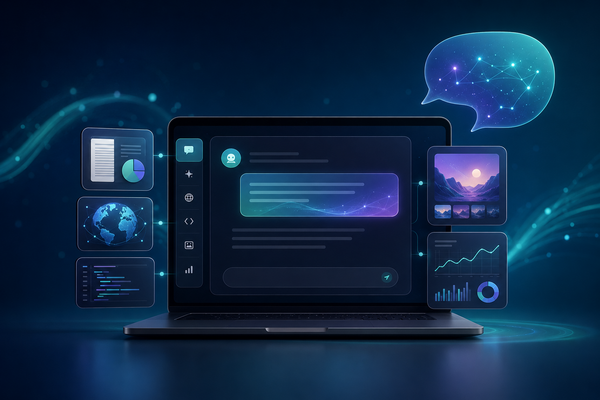
ChatGPT is a cloud-based generative-AI workspace developed by OpenAI for writing, research, analysis, coding, image creation and business productivity. Unlike a narrowly focused AI tool, ChatGPT combines several capabilities within one SaaS environment, including conversational assistance, web research, document analysis, image generation, voice interaction, coding support and customizable workflows.
OpenAI introduced ChatGPT publicly on November 30, 2022. It is now available through web, Windows, macOS, iOS and Android applications. OpenAI also provides an API Platform for organizations and developers building AI capabilities into their own software, although API usage is billed separately from ChatGPT subscriptions. OpenAI’s original ChatGPT announcement, official ChatGPT downloads.
As a SaaS product, ChatGPT serves several markets. Individuals can use Free, Go, Plus or Pro plans, while teams and larger organizations can evaluate Business or Enterprise. The appropriate plan depends on usage requirements, collaboration needs, administrative controls, security expectations and whether the product will process organizational information.
ChatGPT Product Profile
A structured overview of ChatGPT’s product identity, core features, pricing, intended users, alternatives, advantages, limitations, security and overall market position.
1. ChatGPT Identity and Product Category
ChatGPT is a generative artificial intelligence assistant developed by OpenAI. It supports conversational questions, writing, research, document analysis, image work, voice interaction, coding and other productivity tasks.
The product serves individuals, professionals, teams and large organizations through free and paid plans. Developers can access OpenAI models separately through the OpenAI API.
2. Main ChatGPT Features
Conversational Assistance
Answers questions, explains concepts and follows natural-language instructions.
Writing and Editing
Drafts, rewrites, summarizes and improves emails, articles and reports.
Web Research
Supports current-information research and source-based answers in compatible experiences.
File and Data Analysis
Works with uploaded documents, spreadsheets, presentations and supported datasets.
Image and Voice Tools
Supports image generation or editing and spoken conversations in supported interfaces.
Coding Support
Generates, explains, reviews and troubleshoots code across many programming languages.
Custom GPTs
Allows users to create specialized assistants with custom instructions and tools.
Connected Applications
Can connect with supported external tools and information sources where available.
Developer API
Enables businesses and developers to build AI features into applications and workflows.
3. ChatGPT Pricing Structure
| Plan | Designed For | Pricing Structure | General Positioning |
|---|---|---|---|
| Free | Occasional and first-time users | $0 | Entry-level access with variable model, feature and usage limits. |
| Go | Budget-conscious regular users | Regional monthly pricing | Expanded access above the Free plan in supported markets. |
| Plus | Professionals and frequent users | Monthly subscription with local checkout pricing | Broader access to advanced ChatGPT tools and models. |
| Pro | Heavy individual users | Monthly subscription with local checkout pricing | Higher individual access levels for intensive AI use. |
| Business | Teams and organizations | Per-user monthly or annual billing | Shared workspace, administration and business-oriented controls. |
| Enterprise | Large organizations | Custom pricing | Advanced security, governance, support and deployment controls. |
| OpenAI API | Developers and software companies | Usage-based billing | Programmatic model access for applications, agents and automation. |
4. Best-Fit Users and ChatGPT Alternatives
ChatGPT Is Best For
- Writers, marketers and content teams
- Students, educators and researchers
- Software developers and technical teams
- Analysts and knowledge workers
- Small businesses and professional teams
- Organizations requiring broad AI productivity tools
Popular ChatGPT Alternatives
Alternatives may be considered according to ecosystem integration, writing quality, research depth, privacy, coding capabilities and subscription pricing.
5. ChatGPT Pros and Cons
Pros
- Broad writing, research, coding and multimodal capabilities
- Available across major desktop and mobile platforms
- Offers free access for everyday users
- Provides plans for individuals, teams and enterprises
- Separate API access supports software development
- Large ecosystem of custom assistants and connected tools
Cons
- Can generate incorrect or fabricated information
- Important outputs still require human verification
- Usage limits and model access vary by plan
- API charges are separate from ChatGPT subscriptions
- Advanced organizational controls require higher-tier plans
- Feature availability may vary by region and account
ChatGPT Security and Privacy
Individual Use
Individual users should review data controls, chat history, connected-app permissions and privacy settings before submitting personal, confidential or commercially sensitive information.
Business and Enterprise Use
Business-focused plans may provide additional workspace, administration, access-management, retention and data-protection controls for organizational use.
Final Verdict
Best overall fit: ChatGPT is a strong multipurpose AI workspace for users who need writing, research, file analysis, images, voice and coding in one product. Business and Enterprise plans are more appropriate when organizational administration and data controls are required.
FAQs
1. Is ChatGPT a SaaS product?
Yes. ChatGPT is delivered through cloud-based subscriptions and accessed through the web and supported apps. OpenAI manages the underlying models, infrastructure, updates and service availability.
2. Who develops ChatGPT?
ChatGPT is developed by OpenAI.
3. When was ChatGPT released?
OpenAI introduced ChatGPT publicly on November 30, 2022, initially as a research preview.
4. Which platforms support ChatGPT?
ChatGPT is available on the web, Windows, macOS, iOS and Android. Specific desktop features and operating-system requirements can vary.
5. Does ChatGPT have an API?
OpenAI provides an API Platform for developers, but it is a separately billed service. A ChatGPT subscription does not automatically provide general API credits.
6. How much does ChatGPT cost?
OpenAI currently offers Free, Go, Plus, Pro, Business and Enterprise options. Paid individual prices may be localized.
For most countries, OpenAI lists ChatGPT Business at US$25 per user per month with monthly billing or US$20 per user per month with annual billing. Enterprise uses custom pricing. Current regional amounts should always be confirmed through the official ChatGPT pricing page.
7. Does OpenAI use ChatGPT conversations to train its models?
For individual services, content may be used to improve models depending on the user’s settings. Users can turn off “Improve the model for everyone.”
OpenAI states that data from ChatGPT Business, Enterprise, Edu, Healthcare, Teachers and its API products is not used for training by default unless the organization explicitly opts in. OpenAI Data Controls, OpenAI enterprise privacy commitments.
8. Is ChatGPT secure for business use?
OpenAI states that business content is encrypted at rest using AES-256 and in transit using TLS 1.2 or higher. It also states that organizational data is not used for training by default.
Suitability still depends on the chosen plan, internal policies, regulatory requirements, access controls and the sensitivity of the information being processed. Business and Enterprise should be assessed separately because they provide different administrative, retention, compliance and deployment capabilities.
9. What are the best ChatGPT alternatives?
Major general-purpose alternatives include:
- Anthropic Claude
- Google Gemini
- Microsoft Copilot
The best choice depends on workflow, preferred software ecosystem, governance requirements, model behavior and total cost.
10. Is ChatGPT always accurate?
No. ChatGPT can produce incorrect, outdated or unsupported answers. Important claims should be verified using reliable primary sources, and a qualified person should remain involved in legal, medical, financial or other high-stakes decisions.
Conclusion and final verdict
ChatGPT is one of the strongest general-purpose SaaS choices for individuals and organizations that want a single AI workspace covering writing, research, files, images, coding and recurring knowledge work. Its principal advantage is breadth: one product can support numerous workflows that would otherwise require several narrower tools.
That breadth does not eliminate the need for verification, governance or comparison. Individuals should begin with the Free plan and upgrade when usage limits or advanced capabilities justify the expense. Teams handling company information should evaluate Business or Enterprise instead of relying on individual accounts because OpenAI provides distinct organizational data commitments and administrative controls for those products.
Organizations already standardized around Google Workspace or Microsoft 365 should also compare Gemini and Microsoft Copilot. Users primarily concerned with writing and document-intensive workflows may want to test Claude alongside ChatGPT.
Overall, ChatGPT is best suited to users seeking a versatile AI SaaS platform with broad capabilities, multiple subscription levels, cross-platform access and a separate developer API. It is less appropriate for anyone expecting guaranteed factual accuracy, completely unrestricted usage or enterprise governance from a consumer subscription.