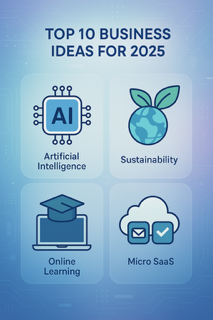
Technology trends 2025 is not a buzz phrase—it is a real inflection point where compounding innovation meets enterprise adoption at scale. In the last three years, organizations tested AI pilots, digitized operations, and explored cloud-first strategies. In 2025, these experiments become core infrastructure. Boards, investors, and regulators are now aligning around a single reality: technology is no longer a support function—it is the profit engine.
Technology Trends to Watch in 2025: Key Innovations That Will Shape Businesses and Markets reflects this new era where automation, artificial intelligence, fintech, cybersecurity, and digital platforms converge into a unified growth stack. For founders, CMOs, CFOs, CIOs, and investors, missing these shifts means losing competitive position—not next decade, but this year.
Across the U.S. and UK, enterprises are moving from fragmented digital tools to vertically integrated technology ecosystems. McKinsey reports that companies embedding AI into core workflows are outperforming peers by 20–25% in operating margins, while Investopedia highlights that fintech-enabled firms are reducing transaction friction and customer acquisition costs significantly. These are not “future possibilities”—they are current performance benchmarks.
Before we dive into specific sectors, we must understand the macro architecture driving these changes.
The Five Structural Forces Behind Technology Trends 2025
1. AI Becomes a Profit Engine (Not a Feature)
Artificial intelligence has crossed the maturity threshold. In 2025, AI is being deployed not just for chatbots or content—but for pricing optimization, fraud detection, supply chain prediction, and autonomous operations.
U.S. Example:
Walmart’s AI-powered demand forecasting now dynamically adjusts pricing and logistics, improving inventory turnover and cutting warehousing waste.
UK Example:
Barclays uses AI-driven fraud detection models to block suspicious transactions in milliseconds, protecting billions in digital payments annually.
(External authority: McKinsey, Forbes)
2. Fintech Infrastructure Is Replacing Traditional Banking Rails
Embedded finance, digital wallets, instant settlements, and decentralized ledgers are rewriting how money flows inside companies.
U.S.: Stripe and Square have become full-stack financial operating systems for SMEs.
UK: Revolut and Wise are now default financial layers for startups and remote-first companies.
This means payments, payroll, compliance, and accounting are merging into programmable financial stacks—cutting costs and increasing speed.
3. Cybersecurity Is Now a Board-Level Revenue Risk
With digital dependency increasing, cyber threats have become systemic business risks. Companies now evaluate cybersecurity the same way they evaluate legal compliance and capital structure.
The UK government has issued new cybersecurity governance requirements, while U.S. enterprises are increasing zero-trust and AI-driven security investments by over 40%.
Cybersecurity is no longer about “IT safety.” It is about shareholder protection.
4. Automation Replaces Entire Departments, Not Just Tasks
2025 marks the year when robotic process automation (RPA), low-code/no-code platforms, and AI agents fully replace administrative layers.
Human teams are shifting from execution to strategy—reshaping labor economics and enterprise valuation multiples.
5. Platform Consolidation Creates Mega-Ecosystems
Companies no longer want 40 SaaS tools. They want five intelligent ecosystems. Microsoft, Google, Salesforce, HubSpot, and Oracle are absorbing dozens of functional categories into unified AI-powered platforms.
This consolidation defines the backbone of Technology Trends to Watch in 2025: Key Innovations That Will Shape Businesses and Markets.
Why This Matters for Businesses & Investors
These macro trends are compressing business cycles. Markets reward companies that integrate early—and punish those who delay.
- Faster revenue growth
- Lower operating costs
- Higher valuation multiples
- Stronger investor confidence
This is the economic engine behind technology trends 2025.
Technology Trends to Watch in 2025: Key Innovations That Will Shape Businesses and Markets
In Part 1, we established why technology trends 2025 represents a structural turning point rather than a cyclical upgrade. Now we zoom into the most dominant pillar of Technology Trends to Watch in 2025: Key Innovations That Will Shape Businesses and Markets — Artificial Intelligence and Enterprise Automation.
This is the layer where the real money is being made.
Across the U.S. and UK, organizations are no longer “testing AI.” They are rebuilding their entire operating models around it.
AI as the New Operating System of Business
In 2025, AI becomes the core operating layer of the modern enterprise — not an add-on. Every high-growth company is quietly transforming into a machine-first organization where humans supervise algorithms.
Real-World USA & UK Examples
| Company | Country | AI Deployment | Business Impact |
| Amazon | USA | Predictive logistics & pricing AI | Reduced delivery times & higher margins |
| JPMorgan | USA | Contract intelligence AI | Cut legal review time by 360,000 hours |
| Ocado | UK | AI robotics warehouses | 99.9% order accuracy |
| Unilever | UK | AI hiring & marketing engines | 30% faster time-to-market |
AI is not increasing productivity — it is replacing operational friction itself.
Automation 2.0: The End of Administrative Labor
Robotic Process Automation (RPA), workflow AI, and autonomous agents are now eliminating entire departments.
What’s Being Automated in 2025?
| Function | Old Model | 2025 Model |
| Accounting | Human teams | AI-led financial bots |
| Customer Support | Call centers | Autonomous conversational agents |
| Sales Ops | CRM admins | Predictive revenue engines |
| HR | Recruiters | Algorithmic talent pipelines |
This is the silent revolution behind Technology Trends to Watch in 2025: Key Innovations That Will Shape Businesses and Markets.
AI-Driven Revenue Engineering
The most important shift in technology trends 2025 is the move from sales teams to revenue algorithms.
- AI predicts churn
- AI sets dynamic pricing
- AI qualifies leads
- AI forecasts lifetime value
- AI optimizes funnels in real-time
U.S. SaaS companies using predictive revenue AI are seeing 18–35% higher conversion rates (HubSpot research).
UK fintech platforms using AI pricing models have improved profitability per customer by 20%+ (Forbes UK).
Regulation Is Creating Moats, Not Barriers
The U.S. AI Safety Framework and the UK’s AI Governance Act are forcing companies to adopt responsible AI architectures. This actually protects early adopters by raising the barrier to entry for competitors.
Smart companies are now:
- Auditing AI pipelines
- Building explainable AI models
- Creating compliance-ready datasets
Which means: regulation is becoming a competitive advantage.
The New Enterprise Stack (2025 Model)
| Layer | Platforms |
| Intelligence | OpenAI, Google Gemini, Anthropic |
| Workflow | Microsoft Power Automate, Zapier, UiPath |
| Revenue | HubSpot AI, Salesforce Einstein |
| Finance | Stripe, Wise, Revolut |
| Security | Palo Alto, Cloudflare, Darktrace |
This AI-centric enterprise stack defines the modern business machine.
Technology Trends to Watch in 2025: Key Innovations That Will Shape Businesses and Markets
By now it’s clear that Technology Trends to Watch in 2025: Key Innovations That Will Shape Businesses and Markets is not a speculative future—it is the present business battlefield. While AI and automation redefine operations, the second major engine of technology trends 2025 is the transformation of money movement, security, and digital trust.
This is where markets are being structurally rewritten.
Fintech Is Becoming the Global Business Backbone
Traditional banks are no longer the primary infrastructure for business finance. In 2025, fintech platforms now operate as programmable money layers embedded directly into enterprise software.
USA & UK Fintech Infrastructure in Action
| Platform | Country | Use Case |
| Stripe | USA | Embedded payments & subscription billing |
| Square | USA | SME operating finance systems |
| Wise | UK | Borderless payroll & contractor payments |
| Revolut | UK | Business treasury & compliance stack |
Businesses are now building their entire revenue architecture on fintech APIs instead of legacy banks. This shift enables:
- Instant settlements
- Global payroll automation
- Built-in tax and compliance layers
- Real-time financial dashboards
Which directly increases valuation multiples and reduces burn.
Cybersecurity Is Now a Valuation Metric
In 2025, cybersecurity readiness directly affects company valuation. Investors now include cyber resilience scoring in due diligence models.
The New Security Stack
| Layer | Purpose |
| Zero Trust Architecture | Eliminates perimeter-based access |
| AI Threat Detection | Stops breaches in milliseconds |
| Cloudflare & Darktrace | Real-time anomaly protection |
| Blockchain Audit Trails | Immutable compliance logs |
UK Example:
The NHS now uses AI-based cyber-defense frameworks to prevent ransomware attacks on patient systems.
U.S. Example:
Fortune 500 firms using AI-powered threat detection have reduced breach recovery costs by over 60% (McKinsey).
Cybersecurity is no longer IT — it is shareholder protection.
Digital Trust & Identity Are Becoming Market Infrastructure
With remote work and borderless commerce exploding, digital identity platforms are becoming foundational to modern economies.
- Decentralized identity verification
- Blockchain audit trails
- AI-powered KYC
- Smart compliance layers
UK fintech regulators are rolling out real-time digital identity standards, while U.S. companies embed biometric and AI verification directly into onboarding flows.
These systems prevent fraud, improve customer trust, and reduce legal risk.
Investor-Grade Digital Business Models (2025)
The smartest founders are building valuation-optimized companies — not just profitable ones.
| Model | Advantage |
| Subscription + Fintech | Predictable recurring cash flow |
| AI-as-a-Service | High margins |
| Data Platforms | Compound valuation growth |
| Embedded Finance | Monetizes transaction flows |
| Automation SaaS | Low overhead, high scale |
These business models sit at the heart of Technology Trends to Watch in 2025: Key Innovations That Will Shape Businesses and Markets.
Technology Trends to Watch in 2025: Key Innovations That Will Shape Businesses and Markets
We now arrive at the synthesis layer of Technology Trends to Watch in 2025: Key Innovations That Will Shape Businesses and Markets—where macro forces, enterprise stacks, fintech rails, and cybersecurity architectures converge into real-world outcomes. This final section translates technology trends 2025 into actionable industry impact, investment positioning, and strategic frameworks for founders, enterprises, and capital allocators.
Industry-Specific Impact of Technology Trends 2025
Healthcare
AI diagnostics, robotic surgery planning, and automated claims processing are compressing treatment cycles and cutting operational waste.
UK: NHS uses AI-based imaging analysis to reduce cancer detection times.
USA: Mayo Clinic applies machine learning for early-stage disease prediction.
Impact: Faster diagnosis, lower costs, improved survival rates.
Finance & Banking
Embedded fintech, AI credit scoring, and real-time fraud detection have transformed banking into software.
UK: Revolut’s automated compliance systems allow instant business onboarding.
USA: Stripe Treasury enables startups to function like banks.
Impact: Lower compliance cost, faster scaling, higher margins.
Retail & E-Commerce
Predictive inventory, AI pricing engines, and autonomous customer service bots are redefining margins.
USA: Amazon uses AI-driven demand planning for same-day delivery.
UK: Ocado’s robotic warehouses achieve near-perfect order accuracy.
Impact: Reduced inventory waste, faster delivery, higher profits.
SaaS & Startups
AI-native SaaS products now scale at 5x the speed of legacy platforms.
Impact: Fewer staff, higher margins, faster exits.
Investor Angle: Where Smart Capital Is Flowing
| Segment | Why It Wins |
| AI Infrastructure | Foundational digital rail |
| Embedded Finance | Monetizes money movement |
| Cybersecurity | Non-discretionary spend |
| Automation SaaS | Low burn, high margin |
| Digital Identity | Trust economy backbone |
These sectors are the capital magnets behind Technology Trends to Watch in 2025: Key Innovations That Will Shape Businesses and Markets.
FAQs on Technology Trends 2025
What is the biggest technology trend in 2025?
AI-led enterprise automation and embedded fintech infrastructure dominate global adoption.
Which sectors benefit most?
Finance, healthcare, SaaS, e-commerce, and cybersecurity.
Is AI adoption risky?
No—regulated, explainable AI now increases compliance and investor confidence.
What skills are most valuable?
AI governance, data engineering, automation architecture, and fintech integration.
Strategic Playbook for 2025 Leaders
- Replace operational workflows with AI engines
- Migrate to fintech-based financial infrastructure
- Upgrade cybersecurity to AI-driven zero-trust models
- Consolidate SaaS tools into unified AI ecosystems
- Build valuation-optimized, automation-native business models
Conclusion
Technology Trends to Watch in 2025: Key Innovations That Will Shape Businesses and Markets defines the blueprint for digital dominance. The enterprises winning today are those that have already aligned with technology trends 2025—adopting automation-first operations, fintech-based financial systems, cybersecurity governance, and AI-native product architectures.
The next wave of market leaders will not be those who use technology—but those who are built on it.
Ignoring these shifts means structural decline. Embracing them means compounding growth, higher valuations, and long-term global relevance.