Introduction
Choosing the right technology can determine whether a small manufacturer grows steadily or struggles with inefficiency. For today’s small manufacturers, Manufacturing ERP for Small Business is no longer a luxury—it’s a necessity. ERP (Enterprise Resource Planning) helps companies connect production, finance, supply chain, and customer management into one unified system.
In this guide, we’ll explore How to Choose the Right ERP System for Small Manufacturing Companies—what features to prioritize, pitfalls to avoid, and real examples of how ERP helps small firms compete with industry giants.
Why ERP Matters for Small Manufacturing Businesses
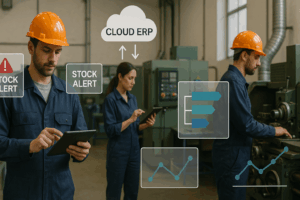
Running a small manufacturing business comes with unique challenges: limited budgets, lean staff, and the need to compete against larger companies. Without ERP, processes remain disconnected—inventory tracked in spreadsheets, separate tools for accounting, and manual order tracking that leads to delays.
Adopting Manufacturing ERP for Small Business integrates these workflows, enabling owners to manage resources effectively and make data-driven decisions.
 Example: A small precision-parts manufacturer in Ohio was losing thousands each year due to excess raw material purchases. After implementing ERP with real-time inventory visibility, they reduced waste by 25% and redirected savings into expanding production capacity.
Example: A family-run garment factory in Vietnam used manual systems to track orders. During peak season, they lost track of shipments, causing a major client to leave. After switching to ERP, they gained full order traceability and regained client trust within one year.
According to Forbes, ERP boosts efficiency, reduces costs, and ensures small firms stay competitive even against much larger rivals.
Benefits of Choosing the Right ERP System
A properly chosen ERP system delivers measurable improvements. Some of the top benefits include:
1. Centralized Data Management
No more siloed spreadsheets. ERP creates a “single source of truth,” so managers, accountants, and shop-floor staff work with the same data.
Case Study: A family-owned furniture manufacturer in Texas previously managed orders in Excel. After ERP adoption, order accuracy improved by 40%, reducing returns and increasing customer trust.
2. Inventory Control
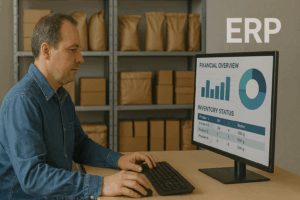
ERP provides real-time visibility into raw materials, work-in-progress (WIP), and finished goods. This helps avoid both overstocking and stockouts.
Example: A craft brewery in Colorado adopted ERP to track brewing ingredients. Previously, hops and malt expired before use, costing them thousands. With ERP alerts, waste dropped by 30%.
3. Production Planning
Aligns schedules, supply chain, and labor needs. ERP ensures machines, workers, and materials are available at the right time.
Example: A bakery in California used ERP to automate production planning during holiday seasons, reducing overtime costs by 18%.
4. Customer Relationship Management (CRM)
Integrated CRM modules improve order accuracy, customer communication, and post-sale service.
Example: A small electronics assembler in Mexico linked its ERP to a CRM. Sales staff could instantly view production timelines, helping them provide accurate delivery dates to customers.
5. Scalability
As the business grows, ERP adapts. Small companies avoid replacing software every few years.
Key Features to Look for in a Manufacturing ERP for Small Business
Not all ERP systems are created equal. Here’s what small manufacturers should prioritize:
1. Ease of Use & Low Learning Curve
Your team may not have in-house IT experts. Choose ERP with intuitive dashboards and drag-and-drop interfaces.
Real Example: Odoo, a popular ERP, is praised by small businesses for its simple UI and mobile accessibility—allowing shop-floor staff to update production data on tablets without technical training.
2. Scalability & Cloud Deployment
Cloud-based ERP reduces upfront costs and makes remote work possible. Subscription pricing models scale with your business.
Example: A small auto-parts manufacturer in Michigan adopted a cloud ERP instead of investing in heavy servers. This reduced IT overhead by 40%.
3. Production & Inventory Modules
Ensure your ERP supports:
- Bill of Materials (BOM)
- Shop-floor control
- Barcode scanning for inventory
- Real-time stock alerts
4. Integration with Accounting Tools
Small firms often use QuickBooks or Xero. ERP should sync seamlessly for smoother financial reporting.
5. Customization & Industry Fit
Manufacturers in food, textiles, or custom machinery should look for ERP tailored to industry compliance (e.g., FDA standards for food manufacturers).
How to Choose the Right ERP System for Small Manufacturing Companies
Step 1: Define Your Business Needs
Map your processes—where do delays occur? ERP must directly address your pain points.
Example: A metal fabrication shop noticed 60% of delays came from mismanaged material purchasing. They selected ERP with a strong procurement module, eliminating bottlenecks.
Step 2: Set a Budget (But Think ROI)
While ERP may feel expensive upfront, the return comes through reduced waste, better forecasting, and labor efficiency.
 ROI Example: According to Panorama Consulting, 95% of companies see process improvement after ERP adoption, with average ROI realized within 2–3 years.
Step 3: Request Demos & Free Trials
Most ERP vendors offer trials. Involve employees who will use the software daily—this prevents resistance later.
Example: A textile startup in Pakistan tested three ERP systems before selecting one. Involving machine operators in demos ensured adoption, as workers felt ownership of the system.
Step 4: Check Vendor Reputation
Look for vendors with proven success in small manufacturing. Review platforms like G2 or Capterra for unbiased customer feedback.
Example: A Canadian packaging company chose a vendor solely based on cost. Six months later, the vendor shut down, forcing them into an expensive re-implementation with another ERP provider.
Step 5: Evaluate Support & Training
Good ERP is wasted without training. Ensure your vendor provides tutorials, onboarding sessions, and 24/7 support.
Example: A dairy plant in New York selected an ERP vendor that provided remote training videos and live chat. This reduced onboarding time from six months to three.
FAQs: Manufacturing ERP for Small Business
Q1: Is ERP too expensive for small manufacturers?
Not anymore. Cloud-based ERP pricing starts at $50–$100 per user/month, making it affordable even for startups.
Q2: Can ERP integrate with my existing tools?
Yes, modern ERP integrates with CRMs, eCommerce platforms like Shopify, and even payment systems.
Q3: How long does ERP implementation take?
Typically 3–6 months for small firms, depending on customization. In many cases, cloud ERP can be deployed within weeks.
Common Mistakes to Avoid When Choosing ERP
- Choosing solely on price – Cheap ERP often lacks scalability, leading to expensive upgrades later.
- Excluding employees from selection – Ignoring staff feedback can lead to low adoption.
- Underestimating hidden costs – Customization, training, and add-ons can inflate costs.
- Ignoring vendor reliability –Small companies lacking dedicated IT staff rely heavily on a strong support system.
Case in Point: A garment manufacturer in Bangladesh opted for a low-cost ERP without checking vendor reliability. Within a year, the vendor shut down, leaving them with unsupported software and wasted investment.
Another Example: A small plastics manufacturer in Poland underestimated customization costs. Their ERP required heavy modifications to fit their process, ballooning the project budget by 60%.
Conclusion
For small manufacturers, the decision to adopt ERP is not just about software—it’s about building a future-proof business. The right Manufacturing ERP for Small Business can streamline workflows, reduce costs, and empower smarter decisions.
When evaluating How to Choose the Right ERP System for Small Manufacturing Companies, focus on your unique needs, scalability, vendor reputation, and employee adoption.
ERP is no longer just for Fortune 500 giants—today, small businesses worldwide are leveraging ERP to compete, grow, and thrive.