Running a business today means facing one of the biggest challenges of the modern market: visibility. Without visibility, even the best products or services fail to gain traction. This is where small business advertising and, more specifically, digital advertising strategies for small businesses come into play.
While large corporations can pour millions into advertising, small businesses need smarter, budget-friendly strategies that focus on precision and impact. In this guide, we’ll break down the best digital advertising approaches, tools, and trends that small businesses can use to grow smarter, not just bigger.

Why Digital Advertising Strategies for Small Businesses Matter
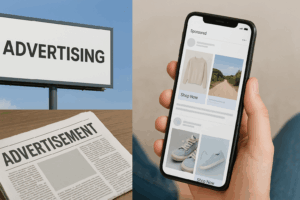
Traditional advertising methods like billboards, radio, or print ads are not only expensive but also difficult to measure. On the other hand, digital advertising strategies for small businesses are data-driven, scalable, and cost-efficient.
For example, a Facebook campaign can start with as little as $5 per day and reach thousands of people, while Google Ads can target customers who are actively searching for services like yours.
 According to HubSpot, businesses that run digital campaigns with clear targeting see 55% higher ROI compared to traditional campaigns.
Real-Life Example: Local Bakery in Chicago
A neighborhood bakery used Instagram and Facebook ads to promote weekend brunch specials. By spending just $150 on targeted ads for nearby ZIP codes, they saw a 30% increase in foot traffic within three weeks. The owner later said the campaign cost less than printing flyers and brought in more repeat customers who discovered the bakery online first.
Best Channels for Small Business Advertising
Every business is unique, but these are the most effective digital advertising strategies for small businesses that consistently deliver results.
Social Media Advertising for Small Businesses
Platforms like Facebook, Instagram, TikTok, and LinkedIn provide hyper-targeting options. You can target based on demographics, location, interests, and even behaviors.
For small businesses, this means advertising budgets go further, as you reach only the people most likely to convert.
Case Study: Small Clothing Brand
A boutique clothing brand in Austin launched a TikTok ad campaign showcasing styling tips. One short video gained 40,000 views, translating into 1,200 website visits and $4,500 in sales. For a brand that previously relied only on walk-in customers, social ads created a completely new revenue stream.
Internal Link: Check out our article on how to scale a business fast for practical tips that complement social media growth.
Google Ads and PPC Campaigns
Google Ads allows your business to appear at the top of search results the moment potential customers look for your services. This pay-per-click (PPC) strategy works well because it captures demand rather than creating it.
For instance, if someone searches “affordable catering in New York,” your catering business can show up at the exact right time.
Case Study: Plumbing Business in Florida
A plumbing company spent $1,000 on Google Ads targeting emergency repair searches. Within a month, they secured 12 new clients, each worth $300–$500 in revenue. The ROI was immediate and measurable—far better than their past investments in print directories.
Email Marketing as a Cost-Effective Strategy
Email marketing remains one of the highest ROI advertising strategies for small businesses. Building an email list allows you to nurture leads, promote offers, and stay top-of-mind—all at very little cost.
Platforms like Mailchimp or ConvertKit make automation simple, and when paired with digital ads, they create a strong funnel for long-term growth.
Real-Life Example: Yoga Studio
A small yoga studio in California collected emails through a free “first class” offer. By combining Facebook lead ads with email automation, they built a 500-subscriber list. Within two months, 70 of those subscribers purchased memberships—adding $12,000 in recurring revenue with minimal ad spend.
How to Build a Digital Advertising Plan
Crafting effective digital advertising strategies for small businesses requires structure. Here are three core steps:
Setting SMART Goals for Small Business Advertising
Instead of vague goals like “get more customers,” set SMART (Specific, Measurable, Achievable, Relevant, Time-bound) objectives.
Example:
“Increase website leads by 20% within 90 days using Facebook Ads.”
This ensures campaigns remain focused and measurable.
Budgeting for Digital Advertising Strategies
Budgeting can be intimidating, but even $500–$1,000 per month can generate results when allocated wisely. Divide your budget across multiple channels—Google Ads, social media, and email—to balance risk.
Case Example:
A landscaping company in Ohio allocated:
-
- $500 to Google Ads
-
- $300 to Facebook Ads
-
- $200 to email promotions
After three months, they reported a 60% increase in service inquiries, with Google Ads bringing the fastest results and email marketing ensuring repeat business.
Tracking ROI and Analytics
Tools like Google Analytics, Meta Business Suite, and HubSpot CRM help track clicks, conversions, and ROI. For small businesses, this means you can quickly adjust campaigns and stop wasting money on what doesn’t work.
Pro Tip: Businesses that check campaign performance weekly save 20–30% of ad spend compared to those that “set and forget.”
Common Mistakes in Small Business Advertising
Even the best digital advertising strategies for small businesses can fail if you fall into these traps:
-
- Not defining a clear target audience
-
- Spending too much on one channel
-
- Ignoring mobile optimization
-
- Failing to track results
Mini Case Study: Restaurant Overspending
A family-owned restaurant in New Jersey put their entire $2,000 budget into print magazine ads. Results? Only two customers mentioned seeing the ad. The following month, they switched to targeted Facebook and Google campaigns with the same budget—and gained 150+ new reservations.
By avoiding mistakes and diversifying strategies, you ensure campaigns remain profitable.
Traditional Ads vs. Digital Ads for Small Businesses
| Factor | Traditional Advertising | Digital Advertising |
| Cost | High (billboards, TV, print) | Flexible – can start as low as $5/day |
| Targeting | Broad, hard to segment | Laser-focused (age, interests, behavior) |
| Measurability | Difficult to track | Real-time analytics |
| Scalability | Limited | Highly scalable |
| ROI | Uncertain | Measurable and higher |
This quick comparison shows why more small businesses are shifting budgets toward digital-first strategies.
Future of Digital Advertising Strategies for Small Businesses
The future is AI-driven. From predictive analytics to automated ad campaigns, small businesses can now leverage tools that were once only available to big brands.
For example, platforms like Google AI Ads and ChatGPT-based ad assistants help create smarter campaigns in minutes.
Example in Action:
A home décor store used AI-powered ad copy tools to run A/B tests on Facebook ads. The AI-generated headline “Transform Your Living Room Under $99” outperformed the owner’s version by 300% higher click-through rate.
As the market evolves, personalization will become the golden rule: the more personal and relevant your ads, the higher the conversion.

Conclusion: Blending Creativity with Strategy
At its core, small business advertising is about connecting with the right people at the right time. The key is blending creativity with strategy. By applying proven digital advertising strategies for small businesses, you can level the playing field against larger competitors and grow sustainably.
Whether you’re running Facebook Ads, building an email list, or testing PPC campaigns, remember this: small, consistent steps compound into long-term success.
For more guidance, read our Emerging Technologies 2025 article to see how future tools can impact advertising decisions.