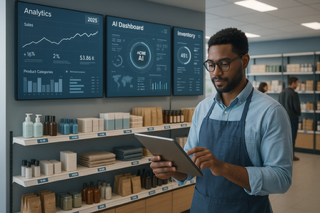
This article explains how AI tools for small businesses transformed a local retail business. In early 2025, “BellaMart,” a small neighborhood retail store in Austin, Texas, was struggling to keep up with rising competition and operational inefficiencies. The owner, Sarah Lopez, had been managing inventory manually, handling customer service alone, and making business decisions based on gut feeling rather than real-time data.
Faced with declining sales and overwhelmed by workload, Sarah decided to invest in a few affordable AI-powered tools tailored for small businesses. She implemented inventory management software powered by AI to predict demand and reduce stock wastage. A chatbot-based customer service system was added to handle common inquiries and improve response time. Most importantly, Sarah began using predictive analytics to identify peak shopping hours, high-margin products, and customer buying patterns.
The results were remarkable. Within just six months:
- Overstocks were reduced by 40%
- Customer complaints dropped by 60%
- Monthly sales increased by 25%
- The store’s profit margin improved, and repeat customers rose by nearly 30%
What began as a traditional, manually-run shop was now a tech-enabled local business operating with the same level of precision as large chains. Sarah now spends more time improving customer experience and less on repetitive tasks — all thanks to accessible and easy-to-use AI tools.
This case highlights that AI isn’t just for tech giants — it’s becoming essential for small businesses seeking to compete and grow in 2025.